
- All
- Product Name
- Product Keyword
- Product Model
- Product Summary
- Product Description
- Multi Field Search
Views: 0 Author: Site Editor Publish Time: 2026-09-03 Origin: Site
As Liquid Cooling Gains Momentum, Why Does Air Cooling Still Matter?
The rapid growth of artificial intelligence, high-performance computing and cloud services is driving server power density to new levels. In AI infrastructure in particular, rack power continues to rise, making thermal management a critical factor in data center availability and operational stability.
Liquid cooling has therefore attracted increasing attention. Technologies such as direct-to-chip cold-plate cooling and immersion cooling can remove heat more directly from high-heat-flux components, including CPUs and GPUs, making them important solutions for increasingly dense computing environments.
However, the growth of liquid cooling does not mean that air cooling is becoming obsolete. In real-world data centers, thermal management strategies vary according to server type, facility design and operational requirements. Liquid cooling may remove most of the heat generated by processors and accelerators, but other server components, network equipment, storage systems and supporting electronics may still depend on airflow.
Air-side systems are also needed to control room temperature and humidity, maintain appropriate air circulation and manage the heat that remains outside the liquid-cooling loop.
Liquid cooling therefore changes how heat is transferred, rather than eliminating the need for air-side thermal management. As a key component of air-handling systems, EC centrifugal fans continue to play an important role in environmental control, auxiliary cooling and airflow management across the data center.
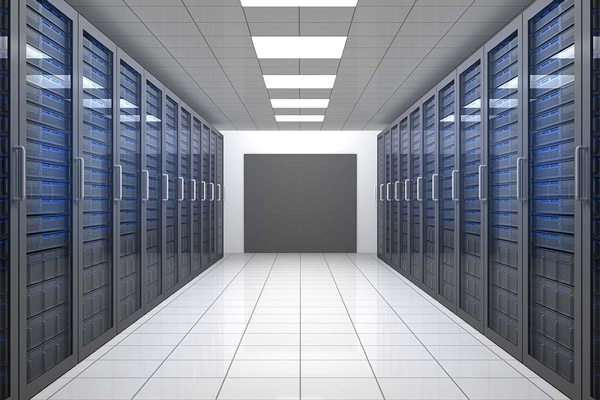
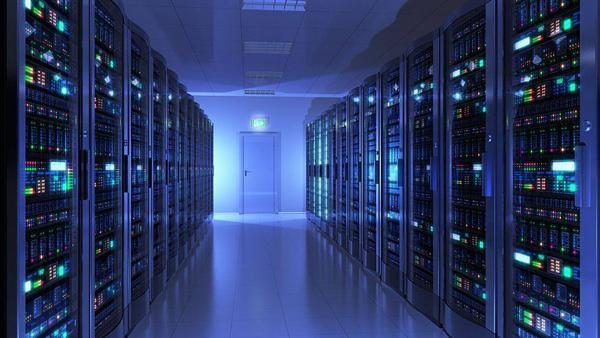
Liquid and Air Cooling Working Together to Build Efficient Data Center Cooling Systems
From High-Volume Air Delivery to Precision Airflow Management
Traditional data centers commonly use CRAC units—computer room air conditioners—or CRAH units—computer room air handlers—to supply conditioned air to server areas. Historically, many systems were designed around relatively high airflow rates and operated continuously to maintain acceptable room temperatures.
As facilities grow larger and IT loads become more dynamic, fixed operating strategies are becoming less suitable for precise thermal management. In hybrid environments where liquid and air cooling operate together, the role of the air-side system is also changing.
Fans are no longer expected simply to move large volumes of air. They must respond to changes in IT load, room temperature and system pressure, delivering airflow where and when it is needed. Airflow can be reduced in lower-load zones and increased in areas with higher thermal demand, helping distribute cooling capacity more effectively.
This creates a broader set of requirements for fan technology. Fans must provide stable airflow, overcome the resistance of filters, cooling coils and ductwork, and remain efficient across a wide operating range.
EC centrifugal fans are well suited to these requirements. Their static-pressure capability, compact design and variable-speed control make them suitable for CRAH units, precision cooling equipment and other data center air-handling applications that require stable operation and flexible control.
EC Technology Enables More Responsive Operation
Data center cooling systems operate around the clock, which means fan energy consumption can make a meaningful contribution to total facility power demand.
In fixed-speed AC fan arrangements, airflow is often adjusted through dampers or other system components. When cooling demand falls, the fan may continue operating at or near full speed, while part of the available energy is lost through throttling.
EC motors provide a more direct and flexible approach to airflow control. EC fans can be speed-controlled and integrated into a building management system or cooling control platform through interfaces such as 0–10 V, PWM and Modbus communication.
When the IT load decreases, fan speed can be reduced. When cooling demand rises, the control system can increase fan speed and airflow accordingly. This demand-based approach can lower energy consumption and reduce unnecessary operation at full load.
For data centers running continuously throughout the year, controllable and efficient fan operation also supports long-term reliability by reducing avoidable mechanical and thermal stress.
Reliability Matters Even More in Hybrid Cooling Environments
Future data center cooling architectures are unlikely to rely exclusively on either liquid cooling or air cooling. A hybrid approach is more practical for many facilities.
High-power AI servers may use liquid cooling to remove most of the heat generated by CPUs and GPUs. Conventional servers, storage equipment, network devices and auxiliary electronics may continue to depend on air cooling. Air-handling systems will also remain responsible for maintaining room temperature, humidity and overall airflow conditions.
Air-side equipment must therefore provide more than cooling capacity. It must also support operational continuity and system resilience.
A modular fan array, often referred to as a FanGrid or fan wall, uses multiple EC centrifugal fans operating in parallel. The number of active fans and their operating speeds can be adjusted according to real-time demand.
When one fan requires maintenance, the remaining units can continue to provide essential airflow, depending on the redundancy designed into the system. This modular architecture can improve serviceability and reduce the risk associated with a single large fan.
It also makes future expansion easier. Fan capacity can be planned or upgraded in stages as IT loads and cooling requirements evolve.、
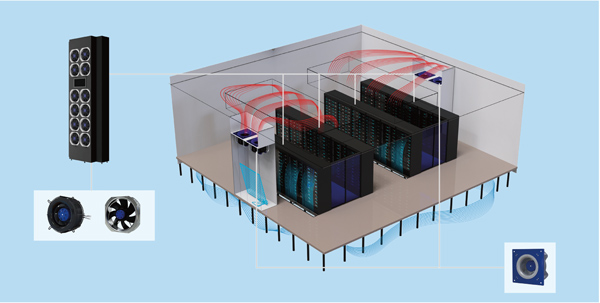
Modular FanGrid Solutions Improve System Reliability and Maintainability
Data Center Fan Selection Is About More Than Airflow
In data center applications, fan selection should never be based on maximum airflow alone.Engineers must also consider available static pressure, efficiency at partial load, control and communication capabilities, motor protection, acoustic performance and access for maintenance. The selected fan should also operate reliably across the expected system curve rather than at a single nominal duty point.
These factors collectively determine how the cooling system performs over its full service life. For mission-critical infrastructure operating continuously, the value of a fan lies not only in peak performance, but also in long-term stability, controllability and maintainability.
Fan manufacturers such as Blauberg Motoren are continuing to develop EC fan technologies with higher efficiency, greater integration and more advanced control capabilities. For data center cooling, air-handling units and precision climate-control equipment, Blauberg Motoren offers EC centrifugal fans across a range of sizes and performance levels.
Available options can include communication control, enhanced ingress protection and integrated operating safeguards, giving equipment manufacturers greater flexibility when designing and integrating cooling systems.
Redefining the Role of Air Cooling
The evolution of data center cooling is not a simple transition from air cooling to liquid cooling. It is a move toward more efficient combinations of technologies, selected according to heat density, equipment design and operating conditions.
Liquid cooling is well suited to removing heat from high-power processors and accelerators. Air cooling continues to support other electronic components, room-level environmental control and overall system balance. The two technologies are complementary rather than mutually exclusive.
For EC centrifugal fans, future value will extend beyond moving air. These fans will increasingly connect cooling performance with energy management, intelligent control, redundancy and system reliability.
Air cooling will not disappear in the liquid-cooling era. Instead, it will become more targeted, more responsive and more closely integrated into the overall data center thermal-management strategy.